

CNC Machining vs Metal 3D Printing for Mold Inserts
Choose CNC machining for a mold insert that can be made with conventional cutting, drilling and EDM. Consider metal 3D printing when an internal cooling channel cannot be machined and poor cooling is limiting the mold. A printed insert still needs a plan for heat treatment, inspection and CNC finishing on critical surfaces. Production volume alone does not decide the process.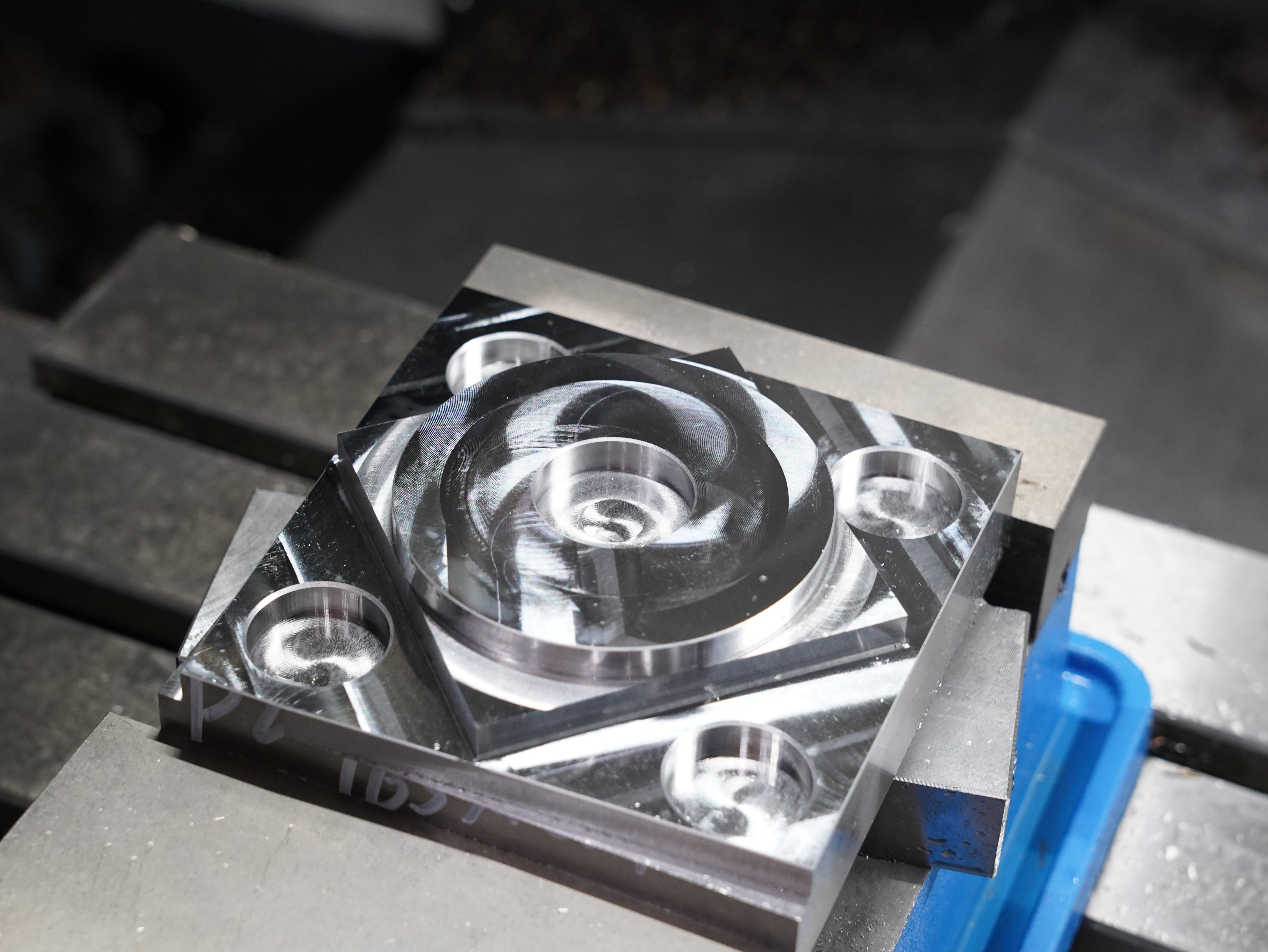
Which Process Fits the Insert?
| Decision point | CNC machining | Metal 3D printing |
|---|---|---|
| Internal geometry | Straight drilled channels and accessible features | Conformal channels or enclosed features that cannot be machined conventionally |
| Critical dimensions | Machined directly to the specified tolerances | Usually finished by CNC after printing and post-processing |
| Surface finish | Accessible mold faces can be machined and polished | As-built surfaces need separate review; critical faces are typically machined |
| Material choice | Broad selection of established mold steels | Limited to qualified materials and processes available from the print supplier |
| Main cost question | How much cutting, EDM and assembly will the shape require? | Will better cooling or fewer manufacturing steps justify printing and finishing? |
Accuracy and Finish
Do not compare a finished CNC insert with an as-printed one. Compare the finished parts against the same drawing: locating faces, shutoffs, sealing surfaces, cavity dimensions and required roughness. Metal printing can produce the internal shape, while machining brings accessible critical surfaces to their final specification. NIST notes that hybrid manufacturing combines complex printed geometry with the tolerances and surface finish achieved through machining; it also identifies distortion during subsequent machining as a concern.[1]
For either route, put the final tolerance and inspection method on the drawing. A machine’s positioning specification is not a guarantee of finished-insert accuracy. If the design calls for CNC finishing, confirm that the supplier can reach every critical face before approving the print orientation or internal-channel layout.
Cooling Performance
Conformal cooling is worth investigating when straight drilled channels leave a hot spot near a deep core, rib or curved cavity wall. The benefit is not a fixed percentage. In one published mold-insert study, a redesigned channel reduced the modeled cooling stage from 50 to 46 seconds and the total cycle from 64 to 60 seconds—a 6.25% reduction in total cycle time.[2] That result applies to the study’s geometry and conditions, not every mold.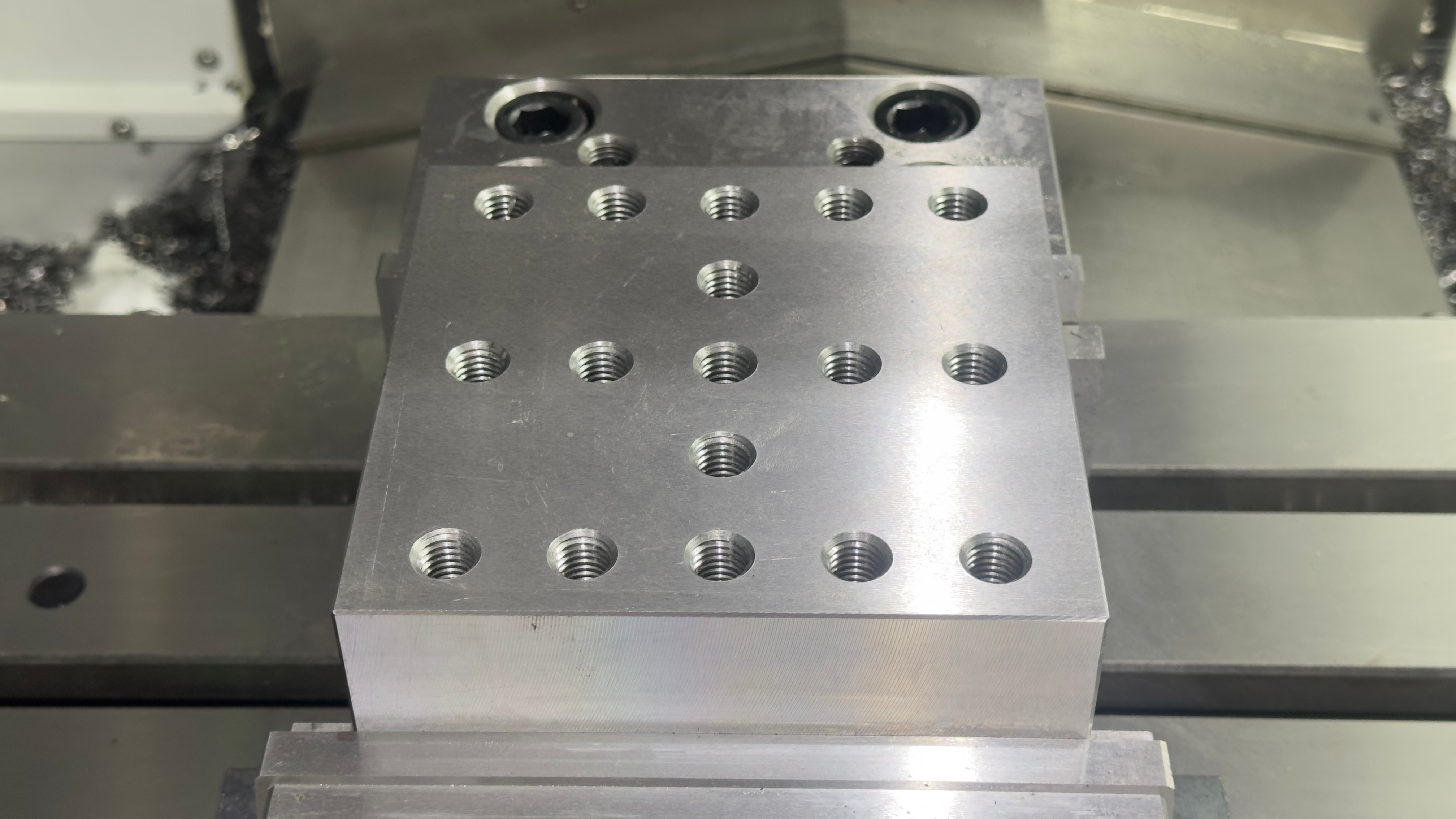
Before paying for a printed insert, record the current cycle by stage: filling, packing, cooling, mold movement and ejection. Then compare the proposed channel design using the same resin, coolant temperature, flow conditions and target part quality. If cooling is not the bottleneck, a more elaborate channel may not shorten the cycle enough to cover its cost.
Material and Tool Life
Neither process has a universal shot-life figure. Resin fillers, corrosion, insert hardness, heat treatment, surface finish and maintenance all matter. For conventional inserts, P20 / 1.2311 is supplied pre-hardened at approximately 28–36 HRC for general plastic-mold applications. H13 / 1.2344 is another available mold-steel option; its final condition should be specified for the job rather than inferred from the grade name.
For a printed insert, ask for the exact alloy, build process, post-processing route and acceptance tests. ISO/ASTM 52908 addresses qualification, quality assurance, post-processing, inspection and testing for metal powder-bed-fusion parts.[3] Do not treat a steel certificate for a conventional blank as proof of the properties of a separately printed insert.
Cost and Lead Time
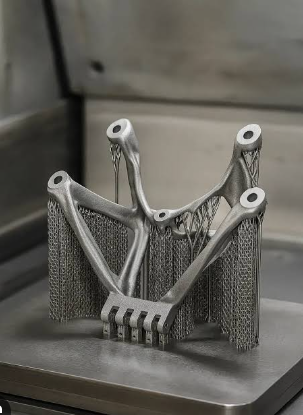
Request prices for the same delivery condition: a mold-ready insert, not a CNC-finished part versus a printed blank. The printing quote should include support removal, the specified heat treatment, CNC finishing, inspection and any cooling-channel test. ISO/ASTM 52901 identifies part definition, feedstock, final properties, inspection and acceptance as information to agree on when ordering an additive-manufactured part.[4]
Calculate any cycle-time saving before accepting a payback claim. For example, a reduction from 64 to 60 seconds saves 4 seconds per cycle. Across 100,000 cycles, that is about 111 theoretical machine-hours. Multiply by the machine-hour cost that can actually be recovered, then account for insert price, downtime and scrap. It is not 111 hours saved per day.
A Practical Review Before Ordering
- Mark the drawing: identify critical faces, tolerances, roughness and areas that must remain accessible for finishing.
- Check the cooling problem: record current cycle stages and the defect or hot spot the new channel is meant to address.
- Compare complete routes: price a conventionally machined insert and, where justified, a printed-and-machined insert to the same acceptance requirements.
- Agree on inspection: specify material records, dimensional checks and a leak-test method appropriate to the cooling circuit.
For the conventional route, cut-to-size mold steel blocks can reduce preliminary stock preparation. Check the required cutting and finishing operations against the actual insert geometry; a vertical machining center’s travel and positioning specifications are only part of that review.