

In the injection mold industry, the choice of mold material often determines processing efficiency, product quality, and mold lifespan. Many mold manufacturers prioritize P20 steel when making molds for automotive plastic parts, appliance housings, or daily necessities. The reason is simple: P20 steel offers a very balanced solution in terms of processing performance, stability, and cost. For many mold factories, their real concerns are not just the price of steel, but also whether the mold can be processed stably, whether it will deform later, the quality of polishing, and whether the mold lifespan is long enough. These are precisely the core advantages of P20 steel.
What is P20 mold steel?
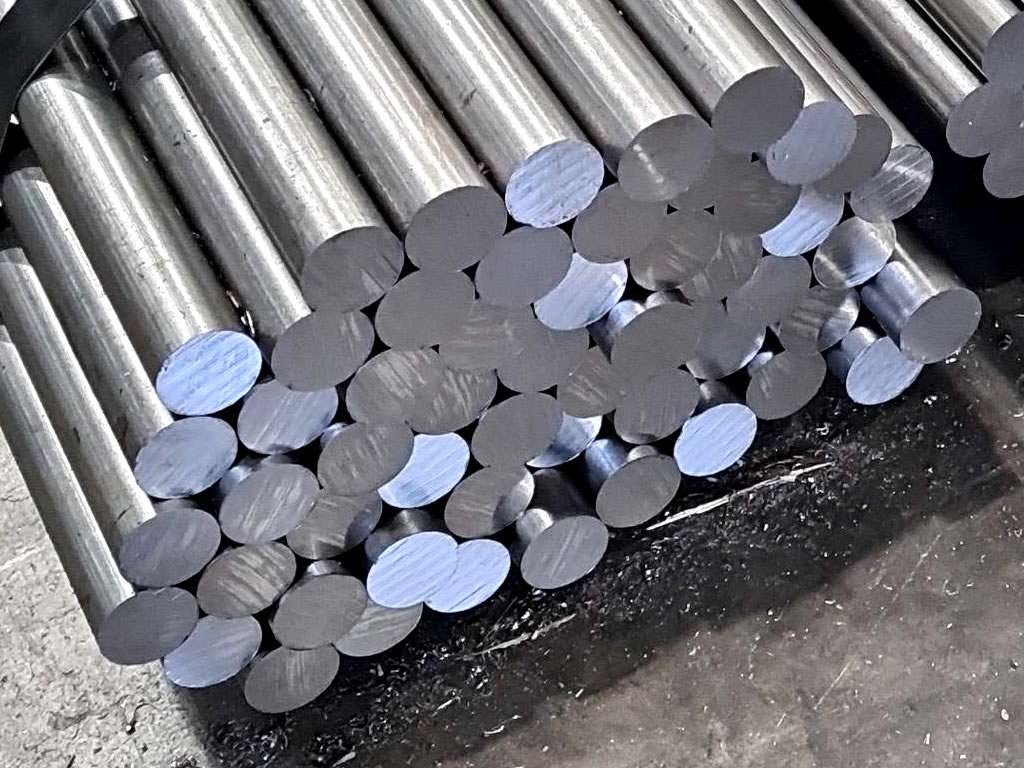
P20 steel is a pre-hardened plastic mold steel, typically with a factory hardness of around 28-35 HRC. This means that mold manufacturers can directly perform CNC machining upon receiving the material, unlike some traditional mold steels which require rough machining followed by complex heat treatment. In actual production, heat treatment is often the most likely step to cause mold deformation. Especially for large injection molds, dimensional deviations not only increase repair costs but can also affect delivery cycles. P20 steel, due to its inherently stable hardness, effectively reduces the risks associated with heat treatment. This is one of the key reasons why many mold manufacturers have long used P20 steel.
Why do many mold factories prefer to process P20 steel?
For mold manufacturers, processing efficiency directly impacts production costs. P20 steel has moderate hardness, resulting in relatively low tool wear and more stable processing speeds during milling, drilling, and finishing. Therefore, many factories prefer to use P20 steel to improve overall processing efficiency when making medium to large-sized plastic molds. Especially in today's market environment with increasingly tight delivery times, a mold steel that is "easy to process and highly stable" is often more valuable than simply being cheaper. Currently, many factories also use high-speed CNC equipment for P20 steel processing; this combination further enhances mold processing accuracy and production efficiency.
Why is the polishing performance of P20 steel important?
Many people only focus on mold hardness, neglecting polishing performance. In fact, in the automotive interior parts, transparent plastic products, and home appliance housing industries, the surface quality of the mold directly affects the final product's appearance. If the mold steel's microstructure is uneven, problems such as pitting and orange peel texture are likely to appear after polishing. P20 steel, due to its high purity and uniform microstructure, typically achieves a better surface finish. This is a key reason why many mid-to-high-end plastic molds still prioritize P20 steel.
Is P20 steel suitable for all injection molds?
While P20 steel has a wide range of applications, it's not the only choice for all scenarios. For general plastic parts molds, appliance molds, and automotive plastic parts molds, P20 steel can meet most needs. However, if the mold is used to produce glass fiber reinforced materials for extended periods, or if particularly high wear resistance and mirror polishing are required, some manufacturers will choose higher-grade mold steels such as 718, H13, or S136. Nevertheless, considering overall processing costs, stability, and production efficiency, P20 steel remains one of the most mainstream materials in the injection mold industry.
In conclusion, P20 steel's long-standing dominance in the injection mold market isn't due to its high price or hardness, but rather its exceptional stability. It strikes a perfect balance between machinability, polishability, dimensional stability, and overall cost, making it ideal for the injection mold industry. For many mold manufacturers, choosing P20 steel essentially means choosing a more stable and efficient production method.
To learn more about our solutions and services, please contact us for more information.
FAQ
1. Does P20 steel require heat treatment?
Usually no. P20 steel is a pre-hardened mold steel and can be directly machined.
2. What is the hardness of P20 steel?
Generally between 28-35 HRC.
3. Is P20 steel suitable for transparent plastic molds?
Yes. P20 steel has good polishing properties and can be used for high-gloss and some transparent plastic product molds.
4. What is the difference between P20 steel and 718 steel?
718 steel is an upgraded version of P20, with better uniformity and polishing properties, making it more suitable for high-requirement molds.