

1. Introduction
In modern mold manufacturing, material selection directly affects machining efficiency, mold precision, and service life.
Among various mold steel materials, P20 mold steel has become one of the most widely used choices because of its balanced mechanical properties and excellent machinability.
As a pre-hardened mold steel, P20 is widely used in plastic molds, mold bases, and precision tooling. Its stable performance makes it especially suitable for CNC machining and large mold manufacturing.
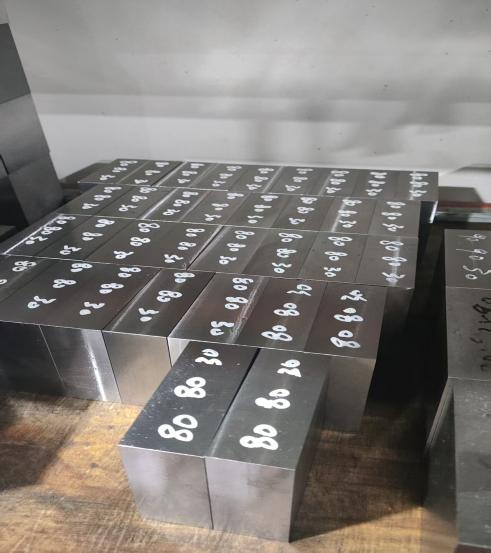
2. What Is P20 Mold Steel?
P20 mold steel is a low-alloy pre-hardened plastic mold steel commonly supplied at a hardness of approximately 28–32 HRC.
Because it is delivered in a pre-hardened condition, manufacturers can directly machine the material without additional heat treatment after rough machining.
P20 steel contains alloying elements such as chromium and molybdenum, which help improve hardness uniformity, toughness, and wear resistance.
Compared with ordinary carbon steel, P20 offers better machining stability and longer mold service life.
3. Why P20 Steel Is Popular in Mold Manufacturing
3.1 Excellent Machinability
One of the biggest advantages of P20 mold steel is its excellent machinability. Compared with high-hardness tool steels, P20 is easier to:
- Mill
- Drill
- Grind
- Polish
This helps manufacturers reduce machining time, improve tool life, and maintain stable machining quality during CNC processing.
For large mold bases and precision mold components, stable machining performance is extremely important.
3.2 Good Dimensional Stability
Dimensional stability is critical in mold manufacturing.
Because P20 steel is pre-hardened, additional quenching after machining is usually unnecessary. This greatly reduces the risk of deformation and dimensional changes during production.
As a result, P20 steel is widely used in:
- Large plastic molds
- Mold bases
- Precision mold plates
3.3 Excellent Polishing Performance
Many plastic molds require smooth surfaces and high polishing quality.
P20 mold steel offers good polishing performance, making it suitable for:
- Consumer product molds
- Automotive interior molds
- Household appliance molds
A smoother mold surface also improves the final appearance and quality of plastic products.
3.4 Balanced Hardness and Wear Resistance
P20 steel provides a good balance between hardness, toughness, and wear resistance.
This allows molds to maintain stable performance under long production cycles while still remaining relatively easy to machine.
Compared with ordinary carbon steel, P20 offers:
- Better wear resistance
- Longer mold life
- Improved machining consistency
4. Applications of P20 Mold Steel
P20 mold steel is widely used in:
- Plastic injection molds
- Mold bases
- Die-casting molds
- Precision tooling components
- Mechanical parts requiring stable machining performance
Because of its balanced properties and cost-effectiveness, P20 remains one of the most practical materials for medium-to-large mold manufacturing.
5. Conclusion
P20 mold steel remains one of the most widely used materials in mold manufacturing because of its excellent machinability, dimensional stability, and balanced mechanical properties.
For manufacturers seeking stable CNC machining performance and reliable mold quality, P20 mold steel continues to be an efficient and cost-effective solution.
FAQ:
1. What is P20 mold steel mainly used for?
P20 mold steel is mainly used for plastic injection molds, mold bases, die-casting molds, and precision tooling components due to its good machinability and stable performance.
2. Why is P20 steel suitable for CNC machining?
P20 steel offers good machinability, balanced hardness, and dimensional stability, making it easier to machine compared with many high-hardness mold steels.
3. Does P20 steel require additional heat treatment after machining?
In most cases, no. P20 is usually supplied in a pre-hardened condition, which helps reduce deformation risk after machining.
4. What are the advantages of P20 mold steel?
The main advantages include good machinability, wear resistance, dimensional stability, and cost-effectiveness.
5. Is P20 steel suitable for large molds?
Yes. P20 steel is widely used for medium-to-large molds because of its stable mechanical properties and reduced deformation risk during machining.