

In the machinery manufacturing industry, 45# steel has always been a widely used material. Whether in ordinary machining workshops or large machinery equipment manufacturing enterprises, 45# steel is almost always one of the commonly used steel grades kept in stock. It belongs to high-quality medium carbon steel, and in international standards it usually corresponds to C45, S45C, or AISI 1045. Due to its excellent comprehensive performance, it enjoys a very stable market demand in industrial production.
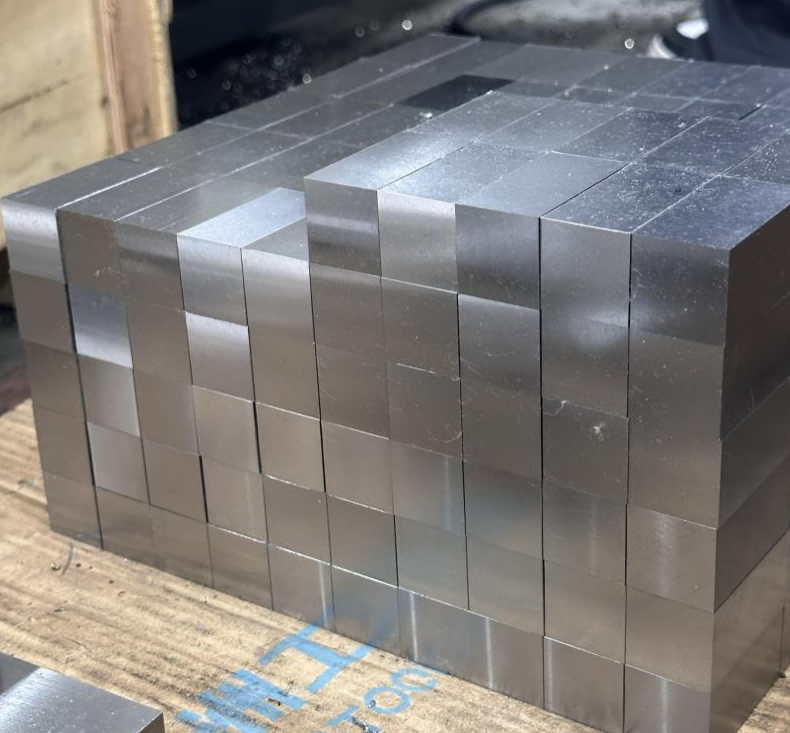
Many customers ask when purchasing materials, "What parts is 45# steel suitable for?" In fact, its application range is wider than many people imagine. From transmission components to structural parts, from precision-machined parts to mass-produced components, 45# steel is very common.
In actual processing, the most typical application of 45# steel is in the manufacture of various shaft parts. Products such as drive shafts, motor shafts, main shafts, and stepped shafts play a crucial role in power transmission and rotational support in mechanical equipment. These parts are constantly subjected to stress, friction, and even high-speed rotation, thus requiring certain strength, toughness, and fatigue resistance from the steel. After quenching and tempering, 45# steel achieves ideal comprehensive mechanical properties, ensuring both strength and toughness, making it very suitable for shaft machining.
Besides shaft parts, 45# steel is also very common in gear manufacturing. Many medium-load transmission gears, gear blanks, pinions, and some sprocket components are machined using 45# steel. The reason is simple: it possesses good machinability and its surface hardness can be improved through heat treatment. After quenching or tempering, the material's wear resistance is significantly enhanced, making it more suitable for long-term meshing transmission. Therefore, 45# steel gears are very common in speed reducers, automated equipment, agricultural machinery, packaging machinery, and industrial transmission systems.
Meanwhile, 45# steel is also widely used in pins, bushings, sleeves, and connecting mechanical parts. Although these parts may seem small, they often serve positioning, fixing, connecting, or guiding functions, requiring frequent contact and friction during equipment operation, thus demanding wear resistance and dimensional stability. 45# steel strikes a good balance between hardness and machinability, making it highly efficient to process and relatively economical in material cost, hence its consistently high usage rate in the processing of these parts.
45# steel also plays an important role in the manufacture of many mechanical structural components. Many companies choose 45# steel as raw material for components such as couplings, support plates, connecting rods, cranks, rollers, and some mechanical parts in hydraulic equipment. Especially for batch processing companies, material stability is crucial. 45# steel is not only widely available and easy to purchase, but also has stable cutting performance, performing well in conventional machining processes such as turning, milling, drilling, and grinding, making it suitable for mass production.
Another very practical reason for the long-term high usage rate of 45# steel is its excellent balance between performance and cost.
While ordinary low-carbon steel is cheaper, its strength and wear resistance are often insufficient. Alloy steel offers higher performance, but significantly increases procurement costs, processing difficulty, and overall manufacturing costs. 45# steel strikes a perfect middle ground—it offers sufficient strength, stable toughness, is easy to process, and is relatively reasonably priced. For most mechanical parts, it meets usage requirements without significantly increasing production costs, making it a consistently high-performance steel in the machining industry.
Even today, with the continuous upgrading of manufacturing and the emergence of more and more high-performance materials, 45# steel remains irreplaceable. This is because it is mature, stable, versatile, and practical. Whether machining shaft parts, gear transmission components, pins, sleeves, or connecting structures, 45# steel continues to hold an important position in the machinery manufacturing industry due to its reliable performance. For many processing enterprises, it is not only a commonly used steel but also an indispensable basic material in daily production
To learn more about our solutions and services, please contact us for more information.
FAQ
1. Is 45 steel suitable for machining shafts?
Yes. 45 steel is one of the most common materials used for transmission shafts, motor shafts, and spindle shafts due to its strength and machinability.
2. Can 45 steel be used for gears?
Yes. It is widely used for medium-duty gears and gear blanks, especially after heat treatment.
3. Is 45 steel easy to machine?
Yes. It has excellent machinability and is suitable for CNC turning, milling, drilling, grinding, and surface finishing.