

For those new to manufacturing, when talking about precision machining, you may only think of lathes and milling machines—but you are missing one critical piece of equipment that defines final accuracy and surface quality: the grinding machine. Whether it’s aerospace engines, automotive parts, medical implants, or high-precision molds, any product requiring extreme dimensional accuracy and smooth finishes relies on grinding machines. Today, we’ll explain grinding machines in the simplest way to help you fully understand this essential equipment.
1. What is a Grinding Machine? The "Micro-Plastic Surgeon" of Industry
A grinding machine is a precision finishing expert in manufacturing. Just like sandpaper smooths wood or stone, a grinding machine uses a high-speed rotating grinding wheel to remove tiny amounts of material from metal workpieces, refining parts to ultra-high precision and smooth surfaces. Its core roles: control dimensional errors to a minimum, create flatter, more wear-resistant surfaces, and improve assembly accuracy and service life. In short: No grinding machines = No high-end precision manufacturing.
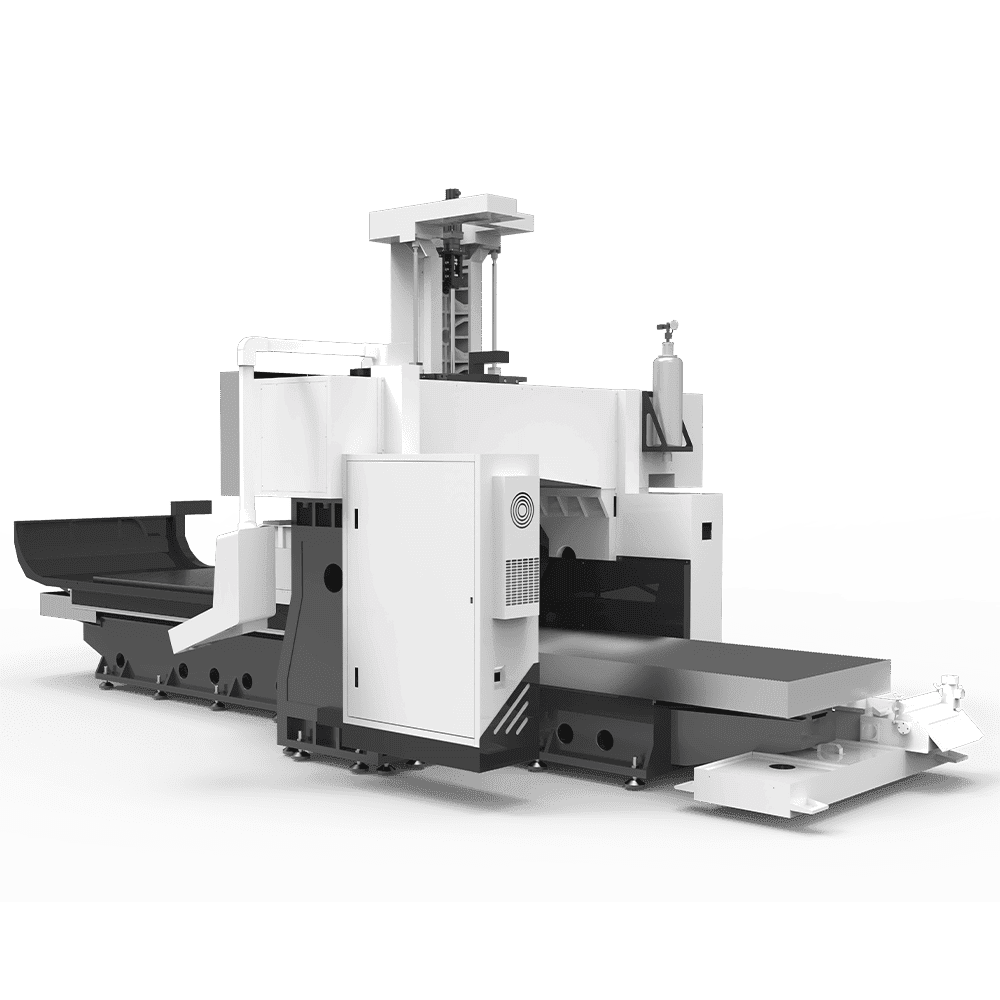

2. How Grinding Machines Work (Super Simple)
The core process is called grinding. The principle is easy to understand: the grinding wheel spins at high speed to create cutting force, removes excess material layer by layer, precisely controls shape, size, flatness, and roundness, and delivers ultra-high precision and mirror-like finishes. Because the material removal is minimal, grinding machines achieve accuracy far beyond lathes and milling machines, making them the final critical step for precision parts.
3. Six common Types of Grinding Machines
Grinding machines are divided into categories based on workpiece requirements:
Cylindrical Grinding Machine: Grinds outer diameters, end faces, and arcs. Suitable for shafts, crankshafts, cams, bearings, piston rods. Features: high precision, excellent cylindricity, smooth surfaces.
Centerless Grinding Machine: No center positioning needed; supported by rollers and a blade. Suitable for mass-produced small shafts, pins, pipes. Advantages: high efficiency, excellent roundness, ideal for mass production.
Internal Grinding Machine: Specialized for inner holes, tapered holes, and blind holes. Suitable for bearing sleeves, mold inner holes, hydraulic valve cores. Features: high inner-hole precision, smooth inner walls, easy assembly.
Vertical Grinding Machine: Vertical spindle design for large, heavy workpieces. Advantages: low vibration, stable accuracy, ideal for large disks and flanges.
Surface Grinding Machine: One of the most widely used; grinds flat surfaces, mold bases, and guide rails. Suitable for mold bases, mold steel, precision plates, hardware parts. Features: exceptional flatness, stable and smooth surfaces.
Tool Grinding Machine: Sharpens and refurbishes cutters, end mills, drills, and turning tools. Purpose: restores sharpness, extends tool life, and improves cutting accuracy.
4. Three irreplaceable Advantages of Grinding Machines
Why are grinding machines a must for high-end manufacturing?1. Ultra-high precision: Standard machines reach ±0.001 mm; high-end CNC models reach ±0.0005 mm—far better than regular cutting equipment. 2. Perfect surface finish: Ground surfaces reach Ra 0.02–0.4 μm, smooth and wear-resistant, greatly extending part life.3. Handles hard materials easily: Easily processes hardened steel, mold steel, stainless steel, carbide, and ceramic—materials that milling machines struggle with.
5. Main Industries That Use Grinding Machines
Grinding machines serve nearly all high-end manufacturing sectors: 1. Aerospace Industry: Engine blades, bearings, and structural parts rely on grinding for stability and flight safety. 2. Automotive Industry: Crankshafts, camshafts, gearboxes, valve cores, and cylinder bodies depend on grinding for performance and reliability. 3. Medical Industry: Artificial joints, surgical tools, and implants need biocompatible, ultra-smooth surfaces—only grinding can deliver this. 4. Mold & General Machinery: Mobile molds, guide pins, ejector pins, gears, hydraulic parts, and communication components all use grinding to upgrade quality.
6. CNC Grinding Machines: The Backbone of Modern Precision Manufacturing
With smart manufacturing, CNC grinding machines have become the industry standard. They offer automatic feeding and compensation, stable, consistent machining, ideal for mass and high-precision production, and less labor dependency with higher efficiency. CNC technology upgrades precision and productivity for surface, cylindrical, and jig grinders alike.
7.Conclusion: Grinding Machines = The Soul of Precision Manufacturing
In manufacturing that demands high accuracy, quality, and stability, grinding machines are irreplaceable. They are the final checkpoint for part precision, service life, and assembly quality—and a key part of your company’s competitiveness. We provide high-precision, high-rigidity, durable CNC grinding machines, including surface grinders and cylindrical grinders. We offer one-stop grinding solutions for molds, automotive, medical, and aerospace industries, helping you improve quality, reduce costs, and boost production efficiency.
FAQ
① Q: What’s the difference between a grinding machine, lathe, and milling machine?
A: Lathes and milling machines focus on shaping and rough machining; grinding machines specialize in finishing, ensuring precision and surface smoothness.
② Q: What materials can a grinding machine process?
A: It can process hardened steel, mold steel, stainless steel, carbide, ceramic, and other hard materials.
③ Q: What precision can a grinding machine achieve?
A: Standard models reach ±0.001 mm; high-end CNC grinding machines can reach ±0.0005 mm.
④ Q: Do small factories need grinding machines?
A: Absolutely. For precision parts, molds, and hardware, grinding machines significantly improve product quality and order-taking capacity.
⑤ Q: What are the advantages of CNC grinding machines over conventional ones?
A: They offer more stable precision, higher efficiency, easier operation, and are suitable for long-term mass production.
|