

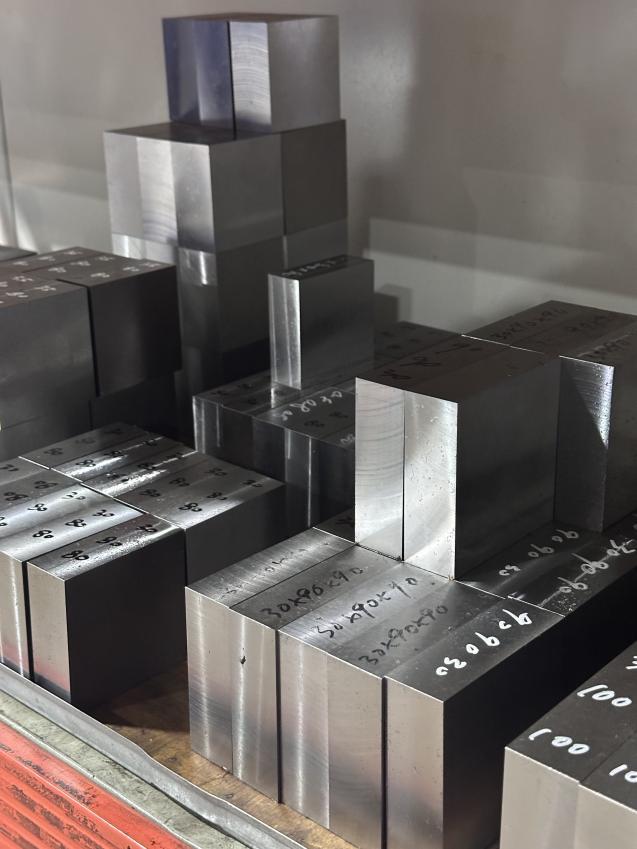
In plastic injection mold making, P20 mold steel is a well-established pre-hardened grade. Beginners often ask: What is P20 material? What are its typical applications, and how should it be machined?
Simply put, P20 is a general-purpose plastic mold steel. Its Chinese grade is 3Cr2Mo, equivalent to AISI P20. It comes pre-hardened to 285–330HB (approx. 30–36HRC). This means end users can directly machine it — milling, drilling, engraving — without additional heat treatment, significantly shortening mold production lead time.
The key advantages of P20 mold steel are good machinability and dimensional stability. Its chemistry (including Cr and Mo) provides decent cutting performance and polishability. If you manufacture injection molds for TV casings, washing machine drums, or vacuum cleaner parts, P20 offers a cost-effective solution. Under normal working conditions, a P20 mold can achieve about 500,000 shots.
A common practical question: Does P20 cause burrs or chipping after machining? This is often related to tool selection. Because P20 is pre-hardened above 30HRC, coated carbide tools are recommended, with moderate cutting speed and reduced feed rate. If the machined surface turns white or tool wear accelerates, lower the spindle speed and apply coolant.
To extend mold life beyond 800,000 shots, you can harden P20 further: preheat at 500–600°C, then austenitize at 850–880°C, oil quench to 50–100°C, and temper immediately at 200°C. Hardness can reach 48HRC or higher. For even better performance, nitriding provides a surface hardness of 650–700HV, pushing mold life over 1 million shots, while improving release properties and corrosion resistance.
In summary, P20 is a “ready-to-use” pre-hardened mold steel for medium-volume plastic mold production. With proper tooling and cutting parameters, you can achieve smooth surfaces and stable dimensions. If you are exploring plastic mold materials, P20 is a reliable starting point.