

In the plastic mold manufacturing industry, the choice of mold steel directly affects mold life, processing efficiency, and overall production costs. Among the many mold steel materials, P20 mold steel is one of the most widely used steels in the field of plastic injection molds due to its moderate hardness, excellent processing performance, and stable overall properties. Compared with high-hardness tool steel, P20 mold steel achieves a better balance between wear resistance and processing efficiency, and is therefore widely used in the manufacture of medium and large-sized plastic molds, automotive parts molds, home appliance molds, and die-casting mold
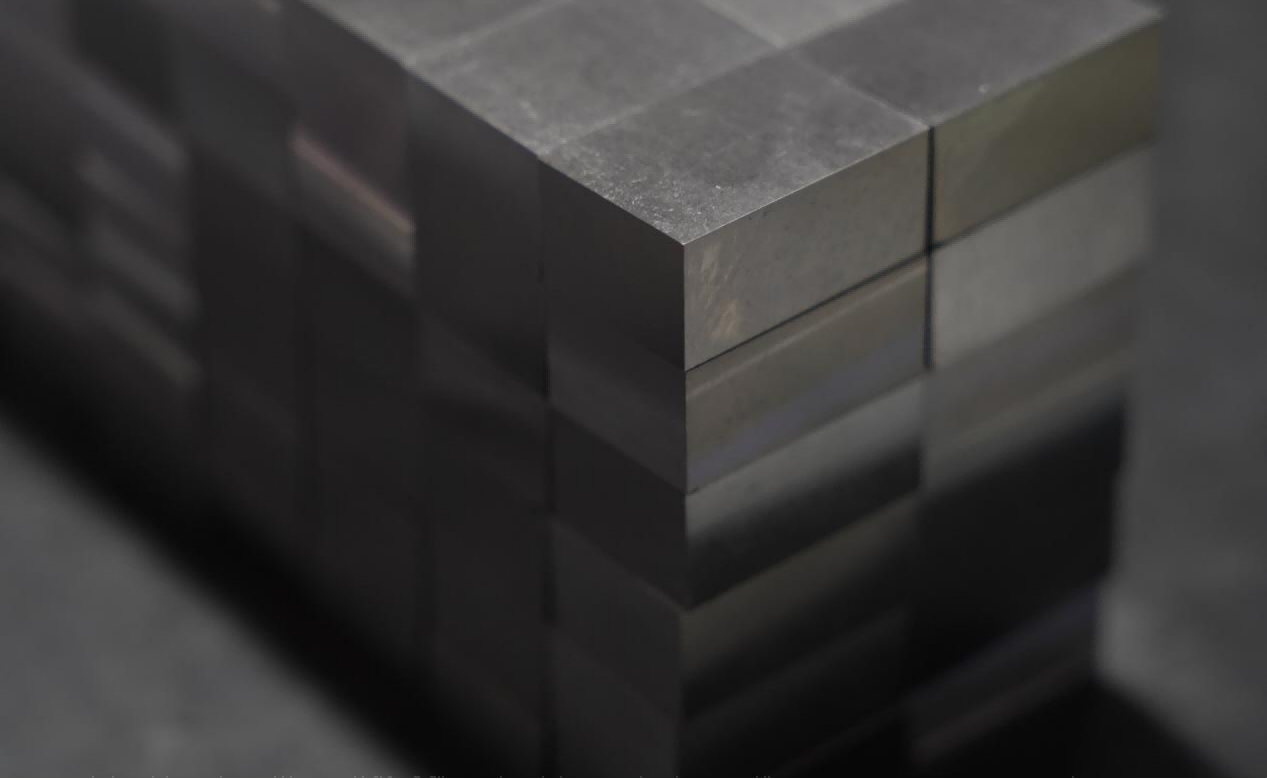
What is the hardness range of P20 mold steel?
P20 mold steel is typically shipped in a pre-hardened state, with a common hardness range of approximately 28–34 HRC. Some upgraded models can reach 36–38 HRC after special heat treatment.
Pre-hardening is one of the biggest advantages of P20 steel. Unlike traditional mold steels that require rough machining followed by quenching and tempering, P20 steel can usually be directly machined into the final mold shape, significantly shortening the production cycle and reducing the risk of deformation during heat treatment.
Generally, 28–32 HRC is suitable for ordinary plastic molds, offering excellent machinability; 30–34 HRC is suitable for medium-batch production molds; and 4–38 HRC offers better wear resistance, suitable for high-volume production needs.
This moderate hardness allows P20 mold steel to maintain good toughness while also ensuring good cutting, milling, drilling, and polishing performance.
Why is P20 mold steel so well machinable?
One of the key reasons for the widespread use of P20 mold steel is its excellent machinability. In mold manufacturing, machining costs typically account for a large proportion of the overall cost. If the material is too hard or difficult to machine, it will not only increase tool wear but also prolong machining time.
P20 steel effectively solves this problem. Because its hardness is controlled within a reasonable range, P20 steel can achieve stable cutting in CNC machining centers and is suitable for high-speed milling, drilling, grinding, and EDM (Electrical Discharge Machining), while maintaining good dimensional stability.
The main machining advantages of P20 mold steel include:
1. Shorter machining cycle: As P20 is a pre-hardened steel, it usually does not require subsequent overall heat treatment and can be directly used for mold cavity machining, thus effectively shortening production delivery time.
2. Good surface finish: P20 steel has good polishing properties, making it ideal for producing molds for plastic products that require high surface finish.
3. High dimensional stability: P20 mold steel has a uniform internal hardness distribution, making it less prone to significant deformation during machining, which is especially important for large and precision molds.
4. Longer tool life: Compared to high-hardness tool steels, P20 steel causes less tool wear, effectively reducing tool change frequency and improving overall machining efficiency.
Common Applications of P20 Mold Steel
Thanks to its well-balanced performance, P20 mold steel is widely used in: plastic injection molds, automotive interior molds, home appliance molds, blow molding molds, die casting molds, mold bases, and mold accessories.
For manufacturing companies that want to balance cost, processing efficiency, and mold life, P20 remains a classic and practical choice for mold steel.

Conclusion
P20 mold steel has long held an important position in the mold manufacturing industry due to its moderate hardness, excellent machinability, good toughness, and stability. Its common hardness range of 28–34 HRC achieves a good balance between wear resistance and processing efficiency, helping companies reduce processing costs and improve production efficiency.
Whether for plastic injection molds or general mold manufacturing, P20 mold steel remains a very cost-effective material solution in modern manufacturing.
To learn more about our solutions and services, please contact us for more information.
FAQ
1. What is the standard hardness of P20 mold steel?
The standard hardness of P20 mold steel is usually between 28–34 HRC in the pre-hardened condition.
2. Does P20 steel require heat treatment after machining?
In most cases, no. P20 steel is supplied pre-hardened, so additional heat treatment is often unnecessary.
3. Why is P20 steel easy to machine?
Its moderate hardness and balanced alloy composition provide good cutting performance, reduced tool wear, and stable dimensional control.
4. What industries commonly use P20 mold steel?
P20 steel is widely used in plastic injection molding, automotive molds, die-casting molds, and general tooling manufacturing.