

In today's highly competitive manufacturing industry, machining efficiency is no longer just an advantage—it is a necessity. Many machining shops focus on improving cutting parameters, upgrading machine tools, or investing in advanced tooling. However, one of the most overlooked opportunities to increase productivity lies in the raw material itself.
For mold makers, CNC machining shops, and precision engineering companies, using 6-side milled steel blocks can significantly reduce setup time, improve machining accuracy, and lower overall production costs.
In many cases, switching from black surface steel blocks to precision 6-side milled blocks can reduce CNC setup time by as much as 50%.
This article explains why.
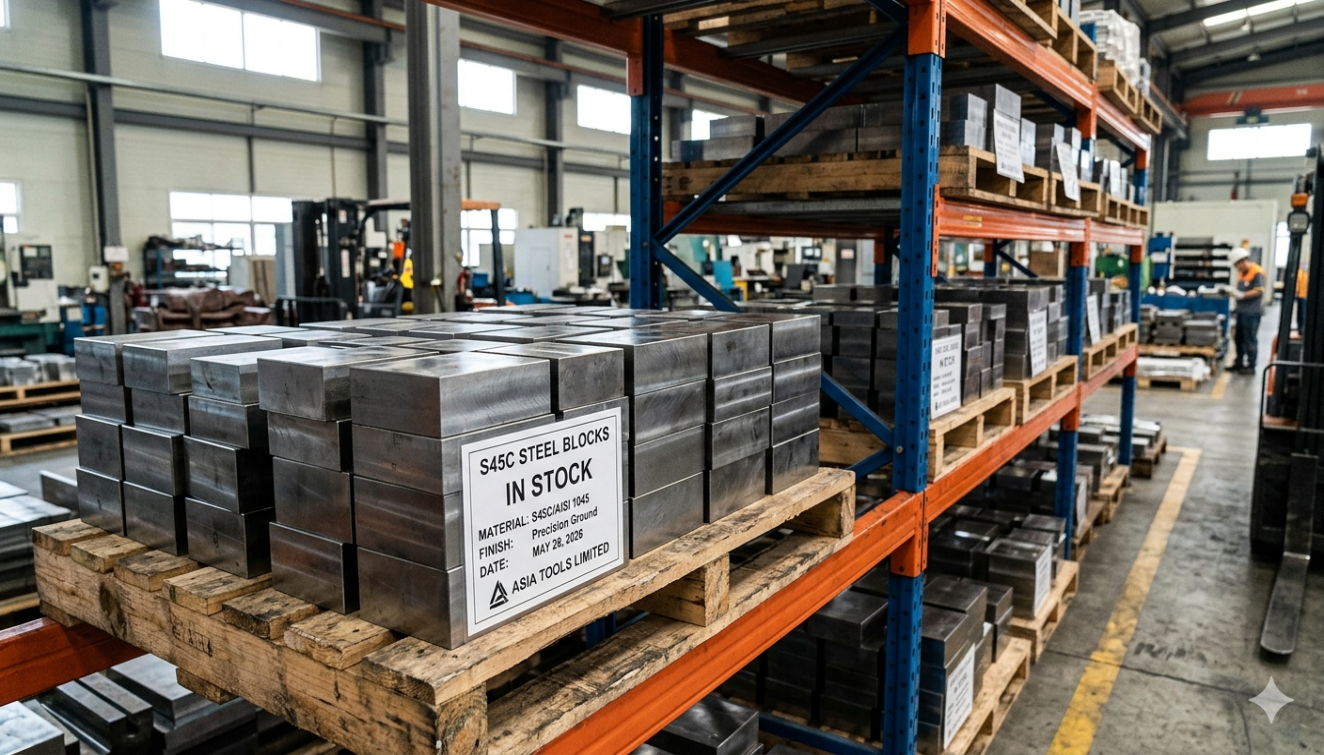
What Is a 6-Side Milled Steel Block?
A 6-side milled steel block is a steel block that has been machined on all six surfaces before delivery.
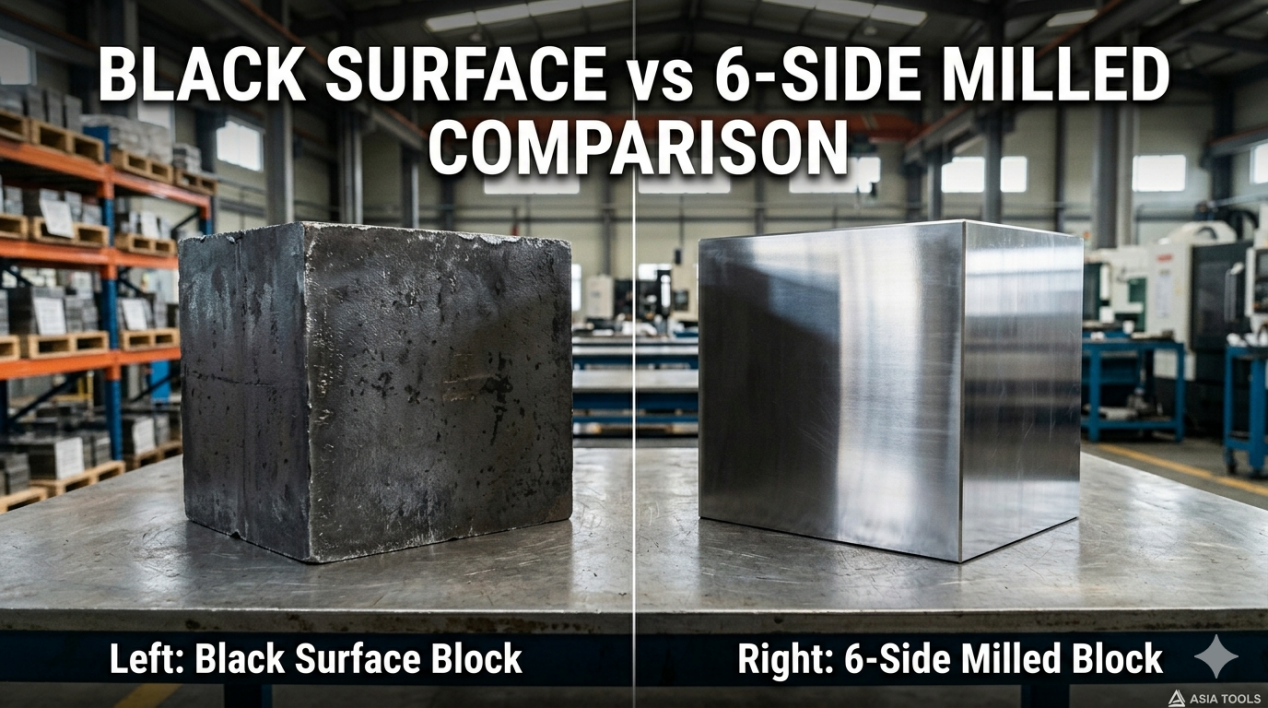
Compared with traditional black surface material, a 6-side milled block offers:
· Improved flatness
· Better parallelism
· More accurate dimensions
· Consistent reference surfaces
· Reduced machining allowance
These advantages allow machinists to start production immediately without spending valuable time creating reference surfaces.
Internal Link Suggestion:
Learn more about our 45# Steel Blocks and machining services.
The Hidden Cost of CNC Setup Time
When manufacturers calculate production costs, they often focus on:
· Material price
· Tooling cost
· Machine hourly rates
However, setup time is frequently underestimated.
Before actual machining begins, operators often need to:
· Check material dimensions
· Correct uneven surfaces
· Establish datum references
· Square the workpiece
· Remove excess material
For rough black surface steel blocks, these preparation steps can consume a significant amount of machine time.
A CNC machine that spends one hour establishing a datum is not producing finished parts.
Why Black Surface Material Creates Extra Work
Many shops purchase black surface steel because the initial purchase price appears lower.
However, the hidden costs often include:
Longer Setup Time
Operators must spend additional time creating accurate reference surfaces.
Increased Tool Wear
Removing large amounts of material accelerates insert wear.
More Risk of Error
Inconsistent surfaces increase the possibility of alignment mistakes and dimensional deviations.
Additional Machine Occupancy
Every extra minute spent preparing material reduces overall machine utilization.
The result is often a higher total manufacturing cost despite lower material pricing.
How 6-Side Milling Improves CNC Efficiency
1. Immediate Datum Availability
The most significant advantage is the availability of ready-made reference surfaces.
Operators can:
· Clamp the material
· Locate the datum
· Begin machining
without extensive preparation.
This can dramatically reduce setup time for mold bases, fixture plates, and precision components.
2. Better Flatness and Parallelism
Poor flatness creates vibration, measurement errors, and inconsistent machining results.
With 6-side milled material:
· Surfaces are already prepared
· Parallelism is improved
· Measurement becomes easier
This leads to greater process stability.
3. Reduced Machining Allowance
Traditional black surface material often requires significant stock removal.
With pre-machined steel blocks:
· Less material needs to be removed
· Cycle times become shorter
· Cutting tools last longer
The reduction in machining allowance directly improves productivity.
4. Improved Repeatability
For production environments manufacturing multiple parts, repeatability is critical.
Because every block arrives with consistent dimensions, operators can use standardized programs and fixtures more effectively.
This is particularly beneficial for:
· Mold base manufacturing
· Fixture production
· Batch machining operations
Real Customer Example
One of our customers initially purchased rough-cut steel blocks for a high-volume machining project.
The order involved approximately 15 tons of S45C steel.
After comparing machining costs, we recommended supplying cut-to-size blocks with precision machining rather than standard rough material.
By reducing material preparation work:
· Labor costs decreased by approximately USD 300
· Cutting insert consumption was reduced by approximately USD 100
· Setup time was significantly shortened
The customer ultimately increased the order volume from 500 pieces to 1,800 pieces after recognizing the productivity benefits.
This example demonstrates that the lowest material price does not always result in the lowest production cost.
Industries That Benefit Most from 6-Side Milled Steel Blocks
Mold Manufacturing
Mold makers require precise datum surfaces to ensure cavity and core accuracy.
Common materials include:
· S45C steel
· P20 steel
· 718 mold steel
Internal Link Suggestion:
Explore our P20 Mold Steel solutions.
CNC Machining Shops
Shops producing custom parts often operate under tight delivery schedules.
Reducing setup time allows machines to spend more time cutting and less time preparing.
Fixture and Jig Manufacturing
Precision fixtures require accurate surfaces from the beginning.
6-side milled blocks reduce the need for extensive preliminary machining.
Is 6-Side Milled Material More Expensive?
The answer depends on how you calculate cost.
If you only compare material price per kilogram, 6-side milled material will naturally cost more than black surface material.
However, when considering:
· Machine utilization
· Tool wear
· Labor costs
· Production lead time
· Rework risk
many manufacturers find that pre-machined material is actually the more economical choice.
The real question is not:
"How much does the steel cost?"
The real question is:
"How much does it cost to turn the steel into a finished product?"
How to Choose Between Black Surface and 6-Side Milled Blocks
Choose Black Surface Material If:
· Cost is the only priority
· Large machining allowance is acceptable
· Setup time is not critical
Choose 6-Side Milled Blocks If:
· Precision is important
· Delivery schedules are tight
· Machine utilization matters
· You want to reduce setup and machining time
For most mold makers and machining shops, the second option delivers better overall value.
Conclusion
As manufacturing becomes increasingly focused on efficiency and productivity, material preparation plays a larger role in overall cost control.
6-side milled steel blocks offer:
· Faster setup
· Better accuracy
· Reduced tool wear
· Shorter machining cycles
· Improved productivity
While the initial material price may be higher, the reduction in labor, machine time, and tooling costs often results in a lower total manufacturing cost.
For companies looking to improve machining efficiency, 6-side milling is not simply a material option—it is a production strategy.
Call to Action
Looking for precision steel blocks ready for machining?
We provide:
· S45C / 45# Steel Blocks
· P20 Mold Steel
· Cut-to-Size Service
· 6-Side Milling Service
· Inspection Reports and Export Packaging
Send us your size list or drawing today and receive a fast quotation.
FAQ
What is a 6-side milled steel block?
A steel block machined on all six surfaces to improve flatness, parallelism, and dimensional accuracy.
How much setup time can 6-side milling save?
Depending on the application, many machining shops report setup time reductions of 30% to 50%.
Is 6-side milled steel worth the extra cost?
For precision machining and mold manufacturing, the savings in labor, tooling, and machine time often outweigh the higher material cost.
Which materials are commonly supplied as 6-side milled blocks?
S45C, P20, 718, and other mold steels are commonly supplied with 6-side machining services.