

1 Introduction
Steel is the core basic material for machinery, construction, automobile and manufacturing industries, featured with high strength and excellent structural stability. However, various quality defects easily occur in smelting, rolling, heat treatment and transportation processes. According to industry data, about 20% of steel products have quality defects, which reduce performance, shorten service life, bring potential safety risks and cause economic losses. Mastering common steel defects, their causes and targeted solutions is essential for manufacturers and purchasers to avoid quality pitfalls.
2 Common Steel Quality Defects and Their Causes
In industrial production, the most frequent steel quality defects mainly include six types, with clear and distinguishable causes. These defects are usually divided into primary defects (occurring during casting) and secondary defects (occurring during processing), among which poor temperature control, raw material impurities and improper operation are the three main inducing factors.
2.1 Surface Cracks
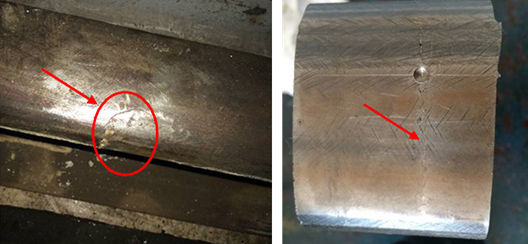
As one of the most intuitive defects, surface cracks are visible fissures on the steel surface, divided into transverse and longitudinal types. They are mainly caused by thermal stress from rapid cooling/heating, improper mechanical processing and excessive impurities (such as sulfur and phosphorus) in raw materials. Severe cracks damage steel integrity and may even lead to brittle fracture and safety accidents in key projects.
2.2 Non-Metallic Inclusions
Inclusions are nonmetallic particles (oxides, sulfides, silicates) trapped in steel, resulting from incomplete smelting, unqualified raw materials and improper casting. They form internal weak points, reducing toughness and wear resistance. For example, excessive inclusions affect precision mold steel polishing and plastic product quality, and steel without strict refining has a 30% lower qualification rate.
2.3 Other Common Defects
Porosity is formed by trapped gas (hydrogen, nitrogen, oxygen) during casting; excessive gas in molten steel reduces steel density and pressure-bearing capacity. Surface decarburization from long high-temperature exposure in oxidizing environments can reduce hardness by 15%-30%. Alloy segregation (from poor mixing or slow cooling) causes inconsistent mechanical properties, while uneven temperature control leads to warping, especially in large steel plates with an 8% deformation rate in unregulated workshops.
3 Effective Prevention and Solution Measures
A set of standardized control measures can effectively reduce the defect rate and ensure stable steel quality. Combined with advanced production technology and industry practice, the following targeted solutions are summarized:
• Source Control: Strictly inspect raw materials to control impurity content (sulfur and phosphorus ≤0.035% for ordinary carbon steel). Recycled scrap steel needs pre-treatment (rust/impurity removal) to avoid harmful substances in smelting.
• Process Optimization: Adopt gradual cooling (50~100℃/h) to avoid thermal stress. Use vacuum degassing and refining technology in smelting to reduce gas content and impurities, and optimize casting to prevent gas entrapment and uneven components.
• Handling and Testing: Standardize handling to avoid mechanical damage. Use non-destructive testing (ultrasonic, magnetic particle) to detect hidden defects timely, which can improve defect detection rate by over 85%.
4 Our Commitment to Quality Steel
With strong supply chain resources, we can provide a complete production line from raw material selection, forging, heat treatment to CNC machining, and all control systems and production links are subject to strict quality inspections. We focus on providing high-quality steel processing services, strictly control the quality of incoming materials through whole-process quality inspection, and provide customized processing services according to customer needs, helping customers obtain qualified steel processed products and avoid quality losses in the processing and use links.
FAQ
Q1: What is the most common steel quality defect?
A1: Surface cracks and inclusions are the most common defects in hot-rolled steel and conventional carbon steel.
Q2: How to effectively reduce steel porosity?
A2: Adopt furnace degassing treatment and optimized casting process to prevent gas from being trapped in molten steel.
Q3: Will steel decarburization affect subsequent processing?
A3: Yes, surface decarburization reduces hardness, which is easy to cause wear and failure in mechanical processing.