

1. Introduction
Mold steel plays a critical role in manufacturing processes such as plastic injection molding, die casting, and forging.
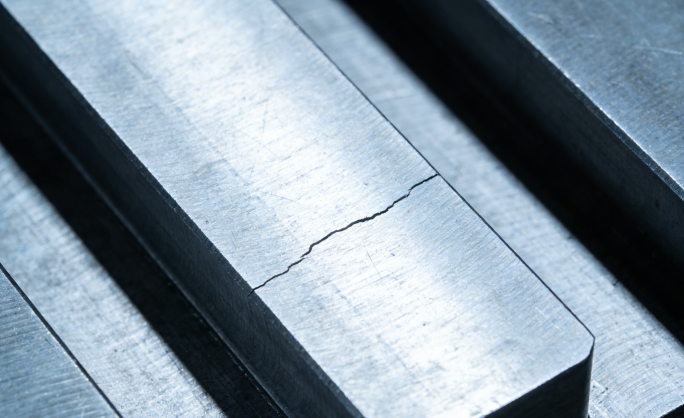
However, cracks in mold steel are one of the most common problems that can lead to tool steel failure, reduced mold life, and higher maintenance costs.
Understanding the causes of mold steel cracking is essential for improving mold performance and ensuring stable production.
This article discusses several common causes of mold steel cracking and provides practical methods to prevent them.
2.Thermal Stress and Rapid Cooling
Causes:
Mold steels are often exposed to repeated heating and cooling during operation. If the temperature change is too rapid, the material may experience severe thermal stress, which can lead to cracking. Rapid cooling can also create internal stress because different sections of the mold cool at different rates.
Prevention:
- Preheat molds before production to reduce thermal shock
- Control cooling rates during heat treatment
- Design molds with uniform thickness to minimize temperature differences
- Use proper heat-resistant mold steels for high-temperature applications
3.Improper Heat Treatment
Causes:
Heat treatment plays a crucial role in determining the mechanical properties of tool steel. Incorrect heat treatment parameters—such as excessive quenching temperature or insufficient tempering—can increase brittleness and make the steel more prone to cracking.
Improper heat treatment may also create residual stresses inside the material, which can eventually lead to cracks during service.
Prevention:
- Follow recommended heat treatment parameters for each steel grade
- Perform proper tempering after quenching
- Ensure uniform heating and cooling during heat treatment
- Use professional heat treatment equipment and monitoring systems
4.Material Defects and Inclusions
Causes:
Internal defects such as non-metallic inclusions, porosity, or segregation can create weak points in the steel. These defects reduce the structural integrity of the material and can initiate cracks under stress or repeated loading.
Prevention:
- Use high-quality mold steel with strict quality control
- Select reliable suppliers with certified material testing
- Conduct ultrasonic or metallographic inspection before machining
5.Poor Mold Design
Causes:
Improper mold design can create areas of stress concentration, especially at sharp corners, thin sections, or sudden changes in wall thickness. These areas are more likely to develop cracks when the mold is subjected to repeated mechanical and thermal loads.
Prevention:
- Avoid sharp corners in mold design
- Use smooth transitions between sections
- Optimize cooling channel layout
- Conduct stress analysis during mold design
6.Improper Machining or Surface Damage
Causes:
Machining operations such as milling, grinding, and EDM can introduce residual stresses or surface defects. If these stresses are not relieved, they may lead to cracks during mold operation.
Grinding burns, micro-cracks, and surface hardening layers are common problems that may reduce mold durability.
Prevention:
- Use proper cutting parameters during machining
- Perform stress-relief heat treatment after heavy machining
- Remove damaged surface layers after EDM processing
- Maintain good surface finish to reduce crack initiation
7.Insufficient Mold Maintenance
Causes:
Poor maintenance practices can also accelerate mold cracking. Lack of lubrication, overheating, and contamination can increase friction and stress on mold surfaces, eventually causing cracks.
Prevention:
- Regularly inspect mold surfaces for early crack signs
- Maintain proper lubrication and cooling systems
- Clean molds regularly to remove debris or residue
- Implement a preventive maintenance schedule
8.Conclusion
Mold steel cracking is a complex issue influenced by multiple factors, including thermal stress, improper heat treatment, material defects, poor mold design, machining stress, and inadequate maintenance.
By understanding these causes and implementing appropriate preventive measures, manufacturers can significantly reduce tool steel failure, extend mold service life, and improve production reliability.
Proper material selection, optimized heat treatment, and effective mold maintenance are key to ensuring long-term mold performance.