

Automatic vs Semi-Automatic Metal Saws: Which Fits Your Production?
Choose a semi-automatic saw when you run small or mixed batches, change sizes often, and have an operator available at the machine. Choose a fully automatic saw when you cut the same material and length repeatedly, need stable batch output, or want to reduce operator time.
As a first planning screen, use fewer than 250 same-size cuts per day as a semi-automatic range and more than 400 as a point where full automation deserves a serious cost review. Between those figures, measure your changeover time, labor hours, and required tolerance instead of relying on a simple rule.
This article compares the automation level of metal saws. Band saws, circular saws, carbide saws, and cold saws are different machine types. Their blade design, material range, cutting speed, and kerf are separate selection decisions. For a comparison of saw types, see this guide to circular saws and band saws for mold steel.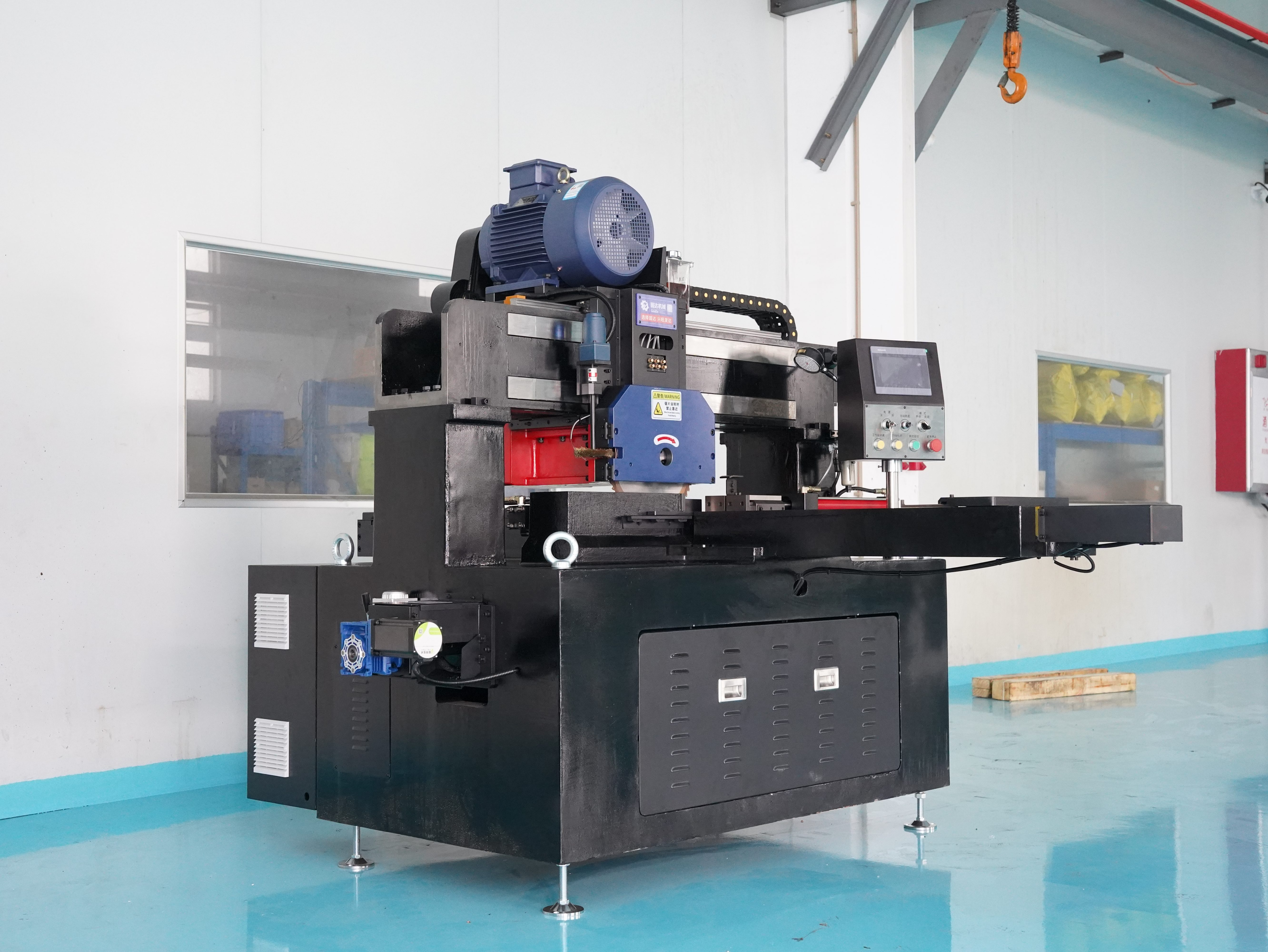
Quick decision guide
| Production situation | Better starting point |
|---|---|
| Fewer than 250 same-size cuts per day with frequent size changes | Semi-automatic |
| More than 400 same-size cuts per day with stable material and length | Fully automatic |
| Between 250 and 400 cuts per day | Run a labor, changeover, and payback calculation |
| Small batches, prototypes, repair work, or many material grades | Semi-automatic |
| Repeat orders, two-shift production, or limited operator availability | Fully automatic |
| Tight dimensional tolerance after sawing | Either type may work; require a test cut using your material and drawing |
What actually changes between the two
A semi-automatic saw still needs an operator to load stock, position it, clamp it, start the cycle, remove the cut piece, and prepare the next piece. The cutting cycle may be automatic, but the handling work remains manual.
A fully automatic saw can control feeding, clamping, cutting, counting, and sometimes unloading after the operator enters the program. It still needs material replenishment, inspection, alarm response, blade checks, and scheduled maintenance. Fully automatic does not mean unattended production.
| Factor | Semi-automatic | Fully automatic |
|---|---|---|
| Operator work | Manual loading, positioning, and unloading for each cycle | Programming, replenishment, inspection, and alarm response |
| Best production pattern | Mixed sizes and short batches | Repeat sizes and long batches |
| Changeover | Usually simpler for occasional size changes | May require a new program, fixture adjustment, and first-piece approval |
| Labor efficiency | One operator is normally tied closely to one machine | One operator may supervise more than one machine if loading, alarms, and layout allow it |
| Batch consistency | Depends more heavily on operator handling and measurement | Usually more repeatable when feed, clamping, blade condition, and calibration are controlled |
| Initial investment | Lower in many shop setups | Higher because of feeders, controls, clamps, racks, and handling systems |
Use the same saw type when comparing automation
Automation and saw type should not be treated as the same decision. A fully automatic band saw is not automatically faster than a semi-automatic circular saw. Blade diameter, tooth geometry, material hardness, section size, feed rate, and cutting length can change the result more than the control system.
For example, a circular saw may cut a smaller steel section faster than a band saw, while a band saw may produce a narrower kerf or handle a different section more economically. Compare semi-automatic and fully automatic versions of the same saw type first, then compare band saw and circular saw options separately.
When reviewing a CNC circular saw, check the actual feed and capacity data instead of judging the machine by motor power alone. For example, the ASIATOOLS PCS-800NC circular saw specification lists automatic feeding, a 600 mm single feeding length, a maximum load of 2,000 kg, a sawing width of up to 800 mm, and a machine size of 4,100 × 3,500 × 2,200 mm. Those figures describe that model; they are not a general rating for every automatic metal saw.
Throughput and operator time
For planning only, a single 60 mm mild-steel round bar cut one piece at a time may produce roughly 120 to 250 cuts in an eight-hour semi-automatic shift and roughly 260 to 450 cuts with a properly set up fully automatic line. These are working estimates, not guaranteed machine ratings.
The actual result depends on:
- Material grade and hardness
- Bar or tube diameter and wall thickness
- Cut length
- Blade type, tooth pitch, and blade condition
- Loading and unloading distance
- Coolant and chip removal
- Number of changeovers
- Alarm, inspection, and maintenance time
A machine that cuts quickly but spends 20 minutes on every changeover may lose to a slower machine when the order contains many short batches. Measure the complete cycle, not only the time that the blade is inside the material.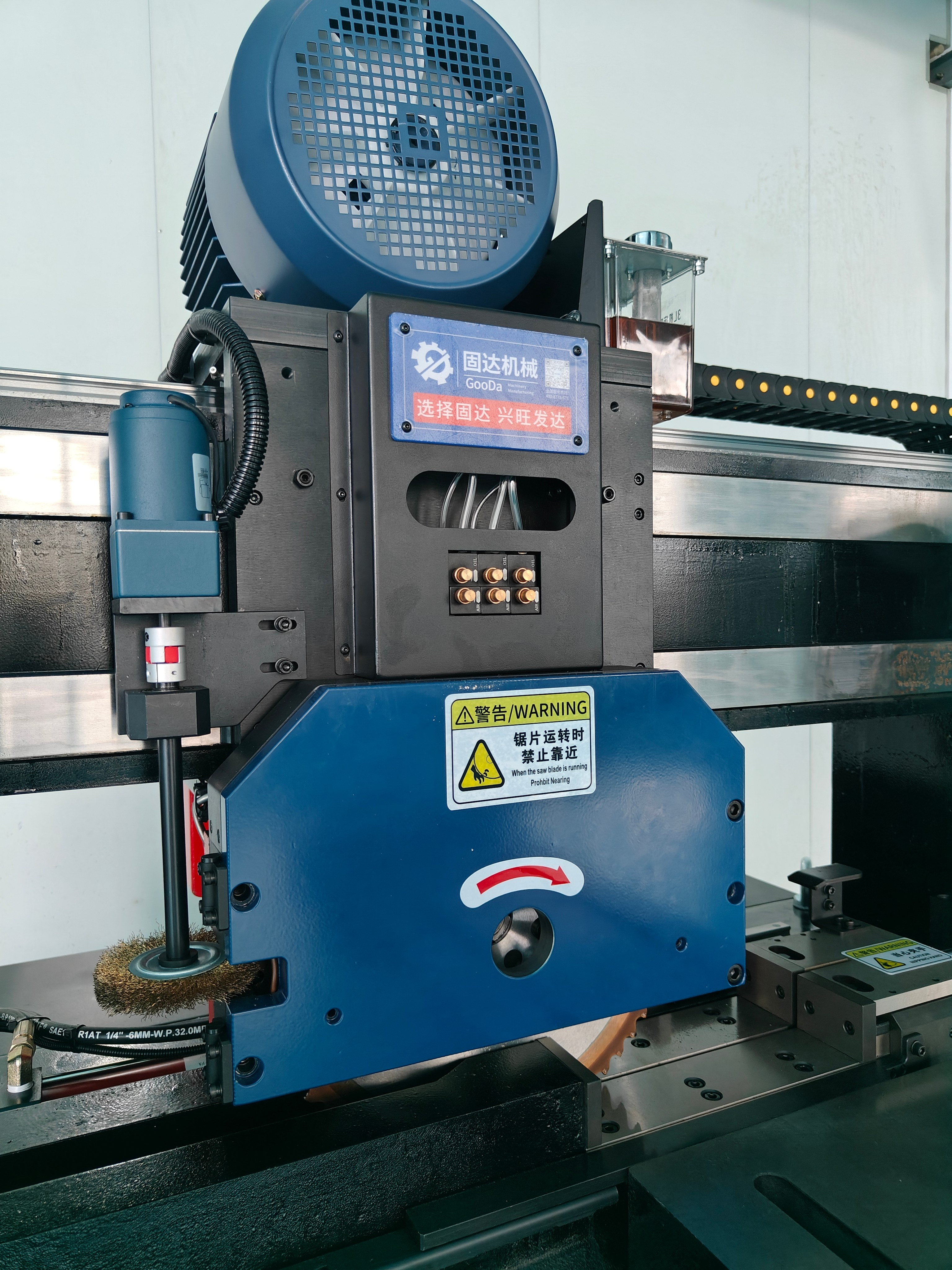
| Time category | What to measure |
|---|---|
| Cutting time | Time from blade entry to completed cut |
| Handling time | Loading, clamping, unloading, and placing the finished piece |
| Changeover time | Last good piece from one job to first approved piece of the next job |
| Downtime | Blade changes, chip removal, alarms, adjustment, and inspection |
| Available production time | Scheduled shift time minus breaks, maintenance, and planned stoppages |
Precision and batch consistency
Automation can reduce variation caused by manual measuring and positioning, but it cannot guarantee a tolerance by itself. A fully automatic feeder can position stock accurately while the workpiece still moves under the blade because of poor clamping, worn jaws, blade deflection, or excessive feed force.
Do not publish or accept a claim such as “±0.1 mm for every batch” without checking the test conditions. Ask the supplier to use your material, your cut length, your blade specification, and your drawing tolerance.
For a practical acceptance test, record:
- Material grade and hardness
- Workpiece dimensions
- Cut length and required tolerance
- Blade material, diameter, thickness, and tooth geometry
- Blade speed and feed setting
- Coolant type and concentration
- First-piece measurement
- Measurement of at least 10 consecutive pieces
- Measurement of the final piece after a longer run
If the first ten pieces are accurate but the final pieces drift, check blade wear, clamp movement, heat buildup, and feed calibration. If every piece has nearly the same error, investigate the reference position or offset. If the top and bottom of the cut face have different lengths, investigate squareness and blade deflection rather than changing the feed offset.
Changeover and product mix
Semi-automatic equipment is often easier to justify when the order mix changes several times per day. The operator can adjust a stop, vise, angle, or cutting setting without managing a large program library.
Fully automatic equipment becomes more attractive when the same part runs for several hours or across multiple shifts. The value comes from repeating the same feeding and clamping sequence with less manual handling.
Time three real changeovers on each machine type. Record the average and the longest changeover. Include fixture adjustment, program entry, blade change, first-piece measurement, and material repositioning. Do not compare only the advertised program-loading time.
| Question | Why it matters |
|---|---|
| How many sizes run in one shift? | Frequent changes reduce the benefit of automation |
| How many pieces run for each size? | Long repeat batches allow automatic feeding to recover its higher cost |
| Does the material need different blades or speeds? | Frequent blade and parameter changes increase downtime |
| Is the next process automated? | Stable cut length helps CNC, welding, and automated handling |
| Can the operator load and inspect more than one machine? | Layout, stock weight, alarms, and safety controls determine the real labor saving |
Cost and payback
Generic machine prices are poor decision tools because the quotation may or may not include automatic feeding, racks, hydraulic clamping, unloading, coolant equipment, installation, training, and spare parts. Compare complete production setups, not machine bodies alone.
Use this calculation:
Payback period = additional equipment investment ÷ annual operating savings
Annual operating savings may include:
- Reduced operator hours
- Reduced overtime
- Lower changeover labor
- Lower scrap and rework
- Higher usable output from the same shift
Subtract the additional cost of maintenance, sensors, hydraulic components, feeders, blades, coolant, and training. Also include the cost of floor space and material handling.
For an illustrative calculation, assume the fully automatic setup costs RMB 100,000 more than the semi-automatic setup. If it removes 0.75 operator-equivalent at a loaded labor cost of RMB 8,000 per month, the labor saving is RMB 6,000 per month. The simple payback is about 16.7 months before maintenance, financing, and downtime are included.
This example is a calculation method, not a market average. Replace every assumption with your local wage, quotation, shift pattern, and measured production time.
Material, blade, and clamping checks
Automation does not compensate for an unsuitable blade. Review the material grade, hardness, section size, tooth pitch, cutting speed, feed rate, coolant, and clamping method together. ASIATOOLS' guide to circular saw selection for steel blocks explains why blade diameter, clamp clearance, tooth selection, and kerf width must be checked against the actual workpiece.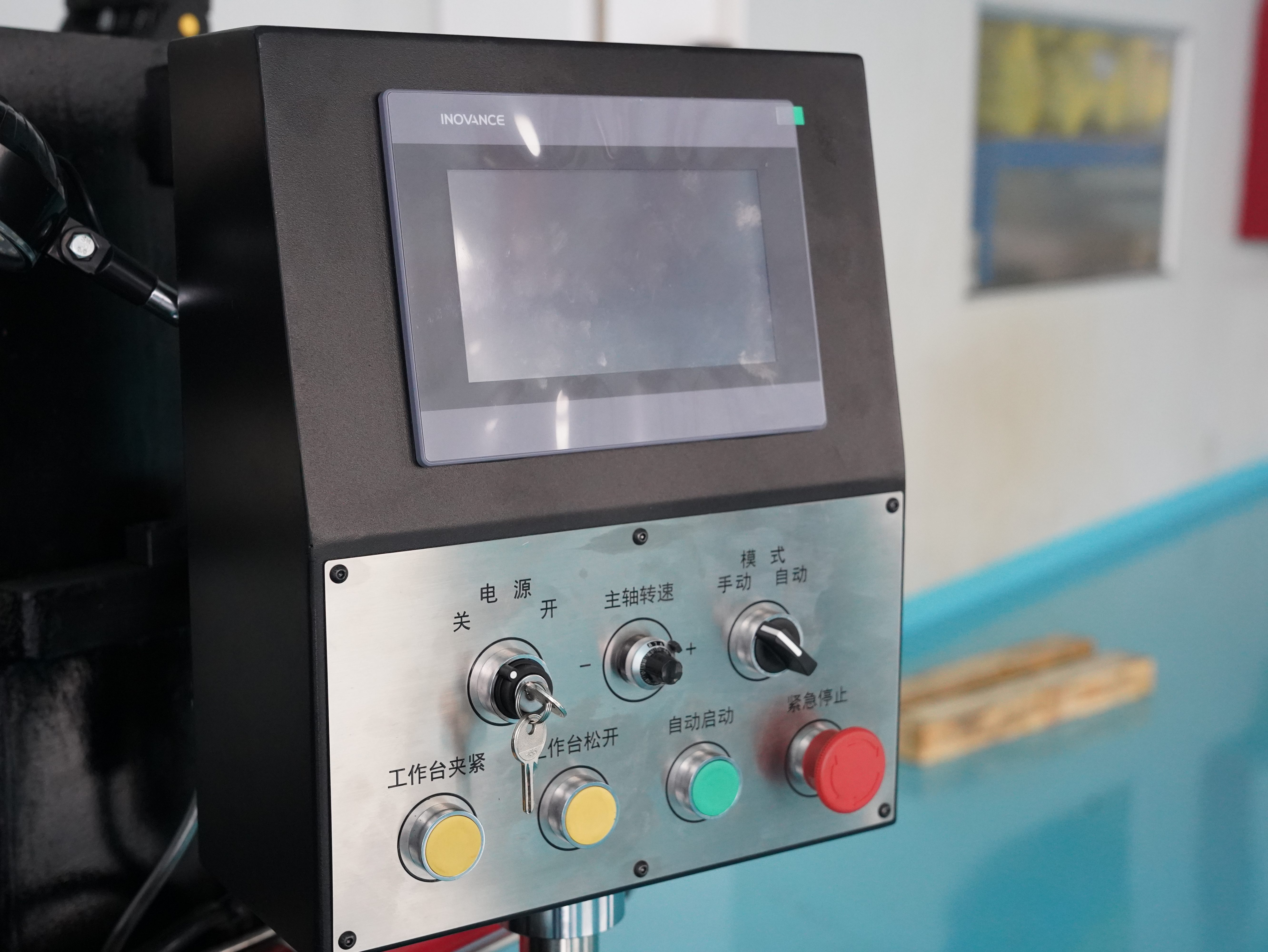
Keep aluminum and steel processes separate when the production volume justifies it. Different blade geometry, speed, coolant, chip behavior, and cleaning requirements can make frequent material mixing expensive. If both materials are cut on one machine, document the blade, speed, feed, coolant, and cleaning procedure for each material instead of using one general setting.
Thin-wall tube also needs a controlled clamping force. Excessive force can deform the section before cutting, while insufficient force can allow movement when the blade enters. Use internal support where required and verify the finished part after release from the vise.
What an experienced buyer checks on the shop floor
The most useful experience is not a slogan about how many parts a machine can cut. It is a repeatable test that exposes where time and accuracy are actually lost.
- Bring the material that causes the most trouble, not only an easy sample bar.
- Record the material grade, dimensions, hardness, blade, coolant, feed, and speed before the test.
- Run one first-piece cycle and approve the measurement before starting the batch.
- Measure 10 consecutive pieces and record the largest spread, not only the average.
- Run a longer batch when repeatability matters. Record the first, middle, and final pieces.
- Time a complete changeover from the last good piece to the first approved piece.
- Check the cut face for burrs, squareness, visible deflection, and heat damage.
- Ask the supplier to explain what happens during a jam, broken blade, missing material, sensor fault, and power interruption.
- Confirm which parts the operator can maintain and which tasks require a qualified service technician.
- Keep the test pieces, measurement sheet, and agreed acceptance limits with the purchase documents.
For an automatic saw with repeated feeding, ask how the machine transfers material between clamps. The ASIATOOLS PCS-800NC specification, for example, identifies a 600 mm single feeding length. If your required feed is longer, ask how many strokes, regrips, and support movements are needed. A longer part may require more than one feeding cycle.
Safety and maintenance
Every saw needs protection at the blade, feed, clamp, and point of operation. OSHA requires machine hazards and points of operation to be guarded; the exact guard and interlock arrangement depends on the machine design and the applicable workplace rules.[1]
Before production, verify the emergency stop, blade guard, access cover, clamp protection, broken-blade protection, and any interlock specified by the machine manual. OSHA's band-saw guidance also emphasizes using an appropriate blade, maintaining the blade correctly, and keeping the hazardous blade area guarded.[2]
Blade changes, jam clearing, cleaning inside guarded areas, and maintenance involving stored electrical, hydraulic, or pneumatic energy require the machine manufacturer's isolation procedure. Lockout and tagout requirements apply when servicing exposes workers to unexpected startup or hazardous energy.[3]
Use a documented risk assessment for new machines, new materials, and process changes. ISO 12100 sets out principles for machinery risk assessment and risk reduction, but it does not replace local laws, the machine manual, or site-specific safety procedures.[4]
Questions to ask before buying
| Question | Evidence to request |
|---|---|
| What output can the machine achieve with my material? | Recorded test using your section, cut length, blade, and coolant |
| What tolerance can it hold over a batch? | First, middle, and final-piece measurements with the measurement method stated |
| What does the quotation include? | Feeder, racks, clamps, coolant, controls, installation, training, and spare parts |
| What happens during a jam or broken blade? | Alarm behavior, safe stop sequence, recovery steps, and restart procedure |
| How many feeding strokes are needed? | Single-stroke length, regrip sequence, support method, and long-part test |
| How quickly are service parts available? | List of wear parts, local stock, response time, and service contact |
| Can the machine run my complete product mix? | Blade, speed, feed, clamping, coolant, and changeover plan for each material |
Final recommendation
Buy semi-automatic equipment when your work is mixed, batches are short, and the operator must make frequent adjustments. Buy fully automatic equipment when the same material and length repeat often enough to keep the feeder running and when the measured labor saving justifies the additional investment.
If your production falls between 250 and 400 same-size cuts per day, do not decide from a catalog number. Time three real changeovers, run your own material, measure a batch, and calculate payback using your local labor cost.
Do not approve a machine until the supplier has demonstrated the required cut length, tolerance, cycle time, blade life, and recovery procedure using your material.
Technical note: The decision thresholds in this article are planning ranges, not universal machine ratings. Equipment capacity, accuracy, price, and payback depend on the saw type, material, blade, workpiece size, automation package, labor cost, shift pattern, and acceptance standard. Confirm final performance with a documented test using your own material. Updated November 4, 2026.