

During long-term injection molding, molds must repeatedly withstand high temperatures, high pressures, the scouring of molten plastic, and complex chemical environments. This means that the corrosion resistance, stability, and surface properties of the steel directly determine the mold's lifespan, the product's appearance quality, and subsequent maintenance and downtime costs.
Among numerous mold steel grades, S136 has almost become the "standard" choice for high-end plastic molds. Whether used for transparent parts, high-gloss finish parts, or medical plastic products with extremely high requirements for cleanliness and stability, S136 is frequently mentioned and widely used. Many mold manufacturers, even at the initial stage of a project before fully confirming product details, will consider S136 as one of the candidate materials. So, why has S136 maintained its mainstream position for so long? Is it truly suitable for all plastic molds? This article will systematically analyze the core reasons for the widespread selection of S136 from a practical application perspective.

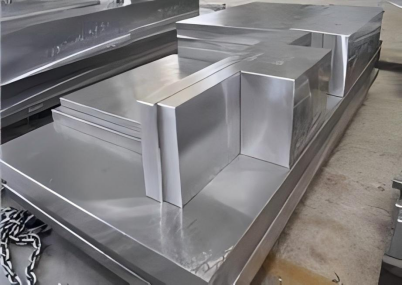
Superior Corrosion Resistance, Reducing Mold Maintenance Costs
S136 is a high-chromium stainless mold steel. Its high chromium content of approximately 13% allows the steel to form a stable chromium oxide film during injection molding, significantly improving its resistance to rust and chemical corrosion. Compared to ordinary tool steel or conventional mold steel, S136 is more resistant to corrosion from acidic gases and moisture in the injection molding environment of plastics such as PVC and POM, thus ensuring that the mold can maintain a smooth cavity surface for a long time.
This characteristic is particularly important for food-grade and medical-grade plastic parts, as even tiny corrosion marks on the surface can become hiding places for bacteria, affecting not only appearance but also potential safety risks.
Excellent Polishing Performance Directly Determines the Upper Limit of Plastic Product Appearance
After undergoing a specific smelting process, S136 steel has very few internal inclusions and a more uniform structure, thus easily achieving a very high mirror finish during polishing. For transparent parts, optical parts, and high-gloss plastic parts, molds require mirror-level cavity surfaces, and the fine structure of S136 reduces micro-defects, ensuring a higher gloss level for the final injection molded parts.
Due to its superior surface quality, S136 can significantly reduce surface defect rates and improve product consistency in applications such as cosmetic containers and medical device housings.
Stable Heat Treatment Properties Facilitate High-Precision Mold Manufacturing
Another advantage of S136 lies in its improved dimensional stability and hardness after heat treatment. After quenching and tempering, S136 can achieve a hardness of 48–54 HRC, while maintaining low thermal stress and deformation, making precision control during mold manufacturing more manageable.
This property is crucial for manufacturing complex cavities and high-precision injection molds. High hardness not only improves wear resistance but also reduces the frequency of regrinding during long-cycle production, thereby lowering long-term maintenance costs.
Not All Molds Require S136——Rational Material Selection is Key
While S136 boasts excellent performance, its cost is typically higher than traditional mold steels like P20 and 718. Therefore, for projects with lower requirements for corrosion resistance and high-gloss polishing, smaller production scales, and cost-sensitive needs, using more cost-effective steels can reduce initial investment.
The current industry recommendations for the steel sector are:
- For molds produced in large batches with high surface quality requirements, S136 should be the priority.
- For molds made from less corrosive plastics or with less stringent appearance requirements, medium-strength steels with better overall performance can be considered.