

Four Key Values of Steel Chamfering
1. Safety Protection and Risk Avoidance
Unchamfered steel edges are extremely sharp and can scratch operators' hands during handling, assembly, or use. They may also damage mating parts during assembly. Chamfering creates rounded edges that effectively eliminate these hazards, ensuring safer operations and reducing the risk of accidental injury or part damage.
2. Smooth Assembly and Efficiency Improvement
Sharp edges frequently cause jamming or misalignment during assembly, requiring repeated adjustments and slowing production. Chamfered parts fit more easily and accurately, improving assembly efficiency. In mass-production environments, chamfering can significantly reduce time spent on alignment and adjustment, making the assembly process faster and more reliable.
3. Stress Distribution and Longer Service Life
Sharp corners on steel components can create stress concentration points, increasing the likelihood of cracking or deformation under load. Chamfering disperses stress along edges, allowing parts to bear loads more evenly. This not only reduces the risk of fracture and deformation but also extends the service life of the components.
4. Quality Optimization and Surface Treatment
Rounded chamfers improve the overall appearance of parts and facilitate better coating, painting, or electroplating results. By reducing coating accumulation and improving surface treatment outcomes, chamfering enhances product quality and contributes to greater market competitiveness.
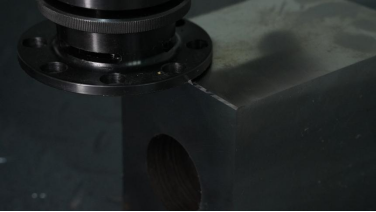
Practical Chamfering Processes
1. Manual Chamfering
Manual chamfering with files is suitable for small-batch processing. It allows operators to precisely shape edges but is labor-intensive and less consistent for high-volume production.
2. Mechanical Chamfering
Mechanical chamfering provides higher efficiency and stability for mass production. It standardizes chamfer size and shape, reducing human error while maintaining consistent quality across multiple parts.
3. CNC Chamfering
CNC machining centers are ideal for high-precision parts, enabling chamfering to be completed simultaneously with other machining operations. This ensures consistent chamfer dimensions, reduces setup time, and integrates seamlessly into automated production workflows.
Chamfering Methods and Machine Selection
Choosing the right chamfering method and machine is essential for achieving precision, efficiency, and consistent surface quality in industrial steel processing. Different production scenarios require different equipment and approaches.
1. Portable Chamfering Machines
Portable chamfering machines are highly flexible and suitable for small-batch production, on-site maintenance, or large parts that cannot fit into stationary machines. Operators can perform accurate chamfers directly on the workpiece, making them ideal for rapid adjustments, repair tasks, and situations where mobility is required.
2. CNC Chamfering Machines
CNC chamfering machines integrate seamlessly into automated production workflows. They are perfect for mass production and high-precision components, allowing chamfers to be completed simultaneously with milling, drilling, or other operations. CNC machines ensure consistent chamfer dimensions, high repeatability, and optimized surface finish, reducing labor costs and minimizing human error.
3. Compound Chamfering Machines
Compound chamfering machines combine multiple chamfering functions in one setup, enabling complex edge treatments in a single pass. They are especially suitable for high-volume production of parts with intricate profiles or varying chamfer specifications, enhancing throughput while maintaining consistent quality.By selecting the appropriate chamfering machine—portable, CNC, or compound—manufacturers can optimize production efficiency, reduce errors, and ensure reliable chamfering quality across different steel grades and part types.